


Corwin
-
Posts
735 -
Joined
-
Last visited
-
Days Won
12
Content Type
Profiles
Forums
Articles
Pages
Everything posted by Corwin
-
Need to find a new vein of motivation for personal projects.
Corwin replied to ElectroSheep's topic in Off-Topic
Takes me a bit more than an hour to get to work, I have a 50min long uninterrupted train ride and I find it a pretty good time to do some coding for a Unity side project, reading, and writing stuff down (e.g. game design ideas, articles, etc.) I agree though that when you have to keep changing trains or buses it's a pain, and not having access to the internet while learning a new craft is super frustrating sometimes, I have to tip toe around problems until I can go online look for an answer in 2 minutes. Not ideal, better than doing nothing :/ -
I approve of the classy logo of this article
-
Need to find a new vein of motivation for personal projects.
Corwin replied to ElectroSheep's topic in Off-Topic
I'm fairly obsessed about making games, and have the same feeling that no matter how much I enjoy my work at a AAA studio, it's not a means for me to really express myself creatively. It's like writing someone else's book, can be fun but what I really enjoy is writing my own shit because that's how I can ever hope to get this weird connection between me and people that I crave for, or that external validation that I'm secretly seeking. I liked the Beginner's Guide for just that small bit where the author wonders about what drives him to make games, like would you still be making games if you couldn't show them to people? Are you happy by being an expert a something, making something impressive, or by creating a bridge between you and players? Anyway, my advice would be to make small but constant progress towards whatever you want to do or be, and this does not mean necessarily mean just making levels or games, but maybe it's enough like HP said to try to focus your personal development, by researching stuff, reading stuff, getting inspired by other mediums, learning new tools not to make something but to develop your skillset, etc. and sticking to that regularly. I myself use my daily commute to work to make sure I do something constructive so I don't feel this stagnation of my skills due to having so little time and energy once at home to do anything I'd like to do for my personal development. -
How to break in the games industry - an insiders' guide
Corwin replied to Furyo's topic in Creative Chat
Nope, seems fine now, weird -
How to break in the games industry - an insiders' guide
Corwin replied to Furyo's topic in Creative Chat
I don't pretend to have the all the answers, but in my opinion you need to figure out what you want to apply for first. That's probably quite hard to do if you like all those things equally, but it's necessary. If I imagine someone working at Epic or another one of those companies you listed and receiving 2 applications from the same person, one for junior game designer, the other for junior level designer, I would expect them to be a little put off by the fact that you don't seem to know what you want. Those can be vastly different jobs and sets of responsibilities depending on the company. Of course, even if you 'choose wrong' and realize working as a GD or manager or LD is not fulfilling, there is always room for growth/change at most companies: once you know the team and they think of you as a person/colleague, not a name on a resume. Even bringing up the fact that you don't know whether you should apply as a GD or a LD at an interview can be valid, because you've established that human contact and can explain your situation, and interviewers can sympathise with you. I think it's that first step where they don't know anything about you and you must make a good enough impression to move on to the next steps of the recruiting process that it's going to be hard to cross if you don't know what you want. Could work if you have contacts already at a company though. This may even be a case of you visiting the office and spending some time with both GDs and LDs to get a gut check on what you think would suit you the most, but again that assumes you have this human contact with someone at that company. Sorry that there's no formula to getting hired, it's a lot of luck, a lot based on who you know too. Beyond that, it's pretty much common sense, and trying to put yourself in the shoes of the recruiter and seeing how you come across as a candidate. -
How to break in the games industry - an insiders' guide
Corwin replied to Furyo's topic in Creative Chat
I personally wouldn't adjust the portfolio for a single company, just for the fact that you may be applying a different ones at the same time. It's hard to know exactly what the company is going to be interested in based on their ongoing projects etc. so better mention everything in a way that's easy to browse through and get the gist of it (experience with what tools, strong points, extra skills...) and let them cherry-pick what suits them (IMO) I wasn't really saying that marnamai's portfolio is necessarily bad in the way he shows his 3d art skills, my post was more of a general point about how to sell yourself, and then an example of how that could apply to his portfolio. For instance I would say it'd be more critical (IMO) to add more info about the projects he's worked on than to restructure the pages he has. I don't know about cases where employers stop at the cover letter. In my experience, who cares about cover letters? They all sound almost exactly the same, and even when the candidate gets a little original with it, it doesn't stand on its own anyway and can just maybe give you an idea of the personality of the candidate. It could go no further than the resume I guess if the experience on it is way too little compared to the needs for that position, but personally I always click the portfolio link (or LinkedIIn if there's no portfolio) out of curiosity and for the sake of being thorough. -
How to break in the games industry - an insiders' guide
Corwin replied to Furyo's topic in Creative Chat
I'm participating in a lot of interviews for new hires at the moment so I think I can comment on this: in my experience, having extra stuff on a portfolio is never a bad thing, it's more about how you sell yourself as being primarily focused on. For instance, we sometimes get resumes of people who've been like: level designer, VFX Artist, Environment Artist, Game Designer... and then Level Designer only at his/her current position, and it's really hard to judge that sort of resume because you don't really get why the guy jumped around so much between different roles, how he could have managed to develop his actual level design skills by doing so many varied tasks, how much time he worked under each different title, etc. and you have to send extra questions or have a phone/skype interview to dig into those question marks (which takes time and some preparation so sometimes we can end up favoritizing another candidate with a more straightforward career path). But, more often than not, it's just that the person wanted to mention every little thing she's contributed to on each project: he was actually hired for and mainly focusing on level design, but because he had the knowledge and the company was small, he also did the extra vfx art and environment art etc. Which of course is totally fine, it would be stupid to penalize a candidate that's a good LD for having extra skills (commonly LD teams end up having a panel of LDs from different backgrounds/interests, like one is an architect, one is a historian, one is a photograph, one was an artist before, etc. and it's only better for it). It's just that it doesn't really come across like that from glancing at his resume/portfolio and may mean, in cases of many applicants or lazy/busy employees, that you get ignored, forgotten, postponed till after another candidate has had his interview, etc. So my advice would be to always tailor your resume and portfolio to the job you're fishing for. If you want a LD position, make it super clear you are mostly focused on LD and all the cool stuff you built and know etc. and add the extra skills as secondary instead of woving them all together into a mess that's hard to get an impression of. For instance, I'm usually an advocate for 'all on one page' portfolios (although it's not my role to tell you how to present your work etc.) and in that sort of layout I'd put the LD stuff at the top and the art, photography, essays, reviews, whatever related activity at the bottom of the page in what you consider the order of interest to a potential employer. In the particular case of your current portfolio, it would be slight touches such as renaming 3D Artist to something more 'humble' maybe, that shows that you don't necessarily consider yourself a full fledged 3d artist but have dabbed into that field and gain some very valid experience out of it; or increasing the font size of LD page links and decreasing the one for extra activities, or really fleshing out the LD page with lots of content and info so it's clear that this is your primary skillset, etc. In any case, I think you should do a new thread to get feedback on your portfolio in general, as I think there's some simple but efficient things you can do to make it a bit more 'professional-like' (fixing a few things like overlapping text (happens to me on chrome, see picture attached), filling up your process page or getting rid of it so it doesn't seem WIP, and adding a bit more descriptions/detail of your LD projects for instance) Extra note on portfolios though: from my experience, I cared a lot about how I would lay out my portfolio when I was looking for a job, but when I look at a candidate's portfolio, I rarely really pay attention to the layout of it or its aspect and go fishing for the content. I often only have a few minutes to dedicate to an application before I go: yes, let's do an phone interview or no, we have better candidates down the pipe or this one is just not what we're looking for. So portfolios in the end (again, in my experience) are really a case of 'I will only care about the aspect/layout if it really sucks'. I would prefer a Word document with pictures and descriptions in it that really manage to convey the candidate's strong points, experience (pro or not), specific skillset (MP, SP, MMO, Mobile, ...) etc. than a fancy portfolio with only nice pictures and nothing for me to dig my teeth in. Anyway, it's always a bit weird to advertize stuff like that because it can just lead to you being disappointed/or us put in an awkward position, but in any case feel free to apply as an LD at CIG Frankfurt if Star Citizen would interest you, we don't have a junior LD position open at the moment but in general we consider all applicants and try to dig deeper than what's on the resume to find potential diamonds in the rough, so if you're confident about your LD skills but have trouble getting employers to even give you a chance to convince them of your abilities, it MIGHT be different here (no promises of course, I don't make the calls, and I can be fairly ruthless during interviews). And if it only goes as far as a skype interview, that's always good experience to take, might give you the edge on a future interview.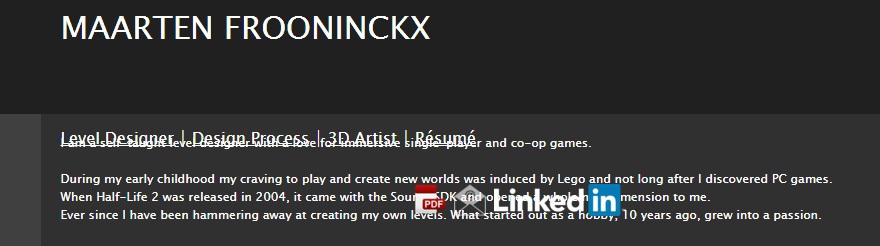
- 302 replies
-
- 10
-

-
So it's been a while since updates, because renovations are slow now that I've gotten back to work. A few months ago, just before I returned to doing levels, I finished the attic room (or almost, needs a bit of clean up on the windows, a TV plug to be finished, and the stairs' railing to be oiled/colored up. It's now being used as my home office (finally dusted off and set up my PC and got myself a decent desk), and a small playroom for the kids until their own room is done. Being a bit of a noob when it came to doing the finitions on the drywall stuff, and lacking the proper tool to do the job, I didn't quite polish it enough and so you can see bumps and irregularities on the walls. I'll probably do another pass on it when I'm done with the rest of the house, either polishing it one more time to get rid of those, or covering with basic wallpaper to hide them. A bit lame to have done all that work just to fail a bit at the end, but it's not preventing us to use the room and it's more of a concern for when I try to sell the house, to give a good impression. And I'm hoping to finish the master bedroom either this weekend or the next, I still have to do a couple things regarding electricity, and to clean up and finish the borders of the floorboards. We can move in as soon as that's done and I've installed curtains on all windows. I had in mind to oil/color the wooden beams so their color matches better the windows/floor, but we're eager to expand the usable space in the house so I'll get back to that at some point in the future when the rest is done, because that stuff is messy and long to do. The good thing is that my experience with drywalls in the attic paid off here and it's way better. I'm slowly working my way down the house, from the attic to the living room/kitchen, because it makes sense that way (I don't risk screwing up something that's finished with my tools/materials while moving up and down the house. So attic = sort of done, master bedroom = almost done, second floor corridor/staircase = needs finish layers and paint and floor boards, then down to the bottom floor to do hallway, kitchen and living room next year. MANDATORY COMPARISON SHOTS! Also, the good thing is our original plan is starting to pay off: there were tough times financially and emotionally near the end of my year off, but since we don't have to pay rent anymore, now that I've got a salary back we're able to start saving money. I still have a few things to buy for the house here and there but for the most part that's a big load off my back and hopefully that'll have made it all worth it.
- 86 replies
-
- 13
-
-
Clever workaround for the limitations of VR when it comes to moving around, the lighting quality reminds me of PT
-
How to break in the games industry - an insiders' guide
Corwin replied to Furyo's topic in Creative Chat
It would probably be a good idea to get at least one thing done with a modern engine, because there are some staples of modern engines that potential employers will wonder if you can quickly jump to. For instance visual scripting would be one of those things: if you only ever used old school scripting engines, people may be concerned they have to 'teach you' visual scripting and favor someone who does have that experience. It's probably worth grabbing Unreal Engine at one point or another in your journey to get up to date with that. But like I said, shit content in a portfolio isn't saved by modern engines, whereas old school but great content + selling yourself at interviews can work. However, the opposite phenomenon can happen, where focusing on what you really like and not what the current demand at employers is ends up paying off. For instance building cool content with Bethesda or Valve's toolkits can lead to employment at such companies. It's a choice you have to make, whether to follow what you love and hope it will lead to great things, or mix it up with experience that meets the popular demand to get some doors open and vary your options in the future. Personally, I started doing what I loved, not thinking too much about future employment, then over the years moved on to doing stuff that could get me hired more easily (more known engines, smaller/more frequent projects, higher profile games...) but that's not necessarily the best course for everyone. -
How to break in the games industry - an insiders' guide
Corwin replied to Furyo's topic in Creative Chat
In my experience, what engine you have experience with only gives you a small boost when it comes to being hired: it's always a plus if your future colleagues don't have to train you and you can jump right in. But it is more important to see relevant experience and quality level design in someone's portfolio, no matter what they built it with. When I mean quality LD, it's a lot of different things combined together, like showing you understand what you're doing and why, showing you can stick to the end and finish something, balance it, that you have an eye for detail, that you know how to lead a player, that the spaces you build are well sized, that you have good scripting experience, that you can create something original that stands out, that you are able to present all those facets of your levels in a straightforward manner through your portfolio and interviews... (a lot of people I interviewed through the years may have been good but were bad at showing that.) And of course there's the actual professional experience which reassures potential employers that you've gone through development and all of its intricaties and can work as a team, deliver on time, etc. Without the professional experience, you have to do a better job at showing you're a good LD through the content of your portfolio and through LD tests that companies give you to assess your skills (and usually start as intern/junior because it's still a bit of a bet for employers, and in some cases because they know you're desperate and they can offer you a shit pay while knowing you'll give all you've got). With relevant pro experience, you're already half-way there and usually the interviews are where the selection happens. When I say valid experience, it's stuff the studio you apply at can use, for instance if you worked on racing games for a while and applied at a FPS-centric company, they may have some reservations about you and have to dig through your personal projects or really drill you at interviews to determine if you'd be worth their investment. That doesn't mean your racing game experience is bad, it will have taught you valuable skills and you'll have gotten through a game's dev process at least once; just that you may have a tougher time convincing employers that you're a good fit if you have no experience in the kind of games they do (rather than with the exact engine they use). Also, completed personal projects are always a plus in any case, whether you have pro experience or not. -
Congratulations to our finalists and Grand Prize Winner, DE_EMPIRE!
Corwin commented on FMPONE's article in Special Events
Congrats, awesome to see how much people this event got together and how much quality content was done for it, truly inspiring! -
I'm nearly done with the upstairs parts (one room needs the floor boards and some cleaning and the corridor needs painting and floor boards too. The kitchen and living room are a bit behind though, didn't manage to make enough progress before the end of my paternity leave. I've still got the ceilings to finish, repair some of the walls, floor tiles and finitions. We're living in it at the moment and have 3 rooms available. I haven't been able to work on it since I got back to work almost a month ago but weekends should free up for the rest of the summer and I intend on wrapping up the top floors quickly, and focus on the living room/kitchen during the fall/winter. There's not that much left, but it's fairly big tasks that you need to do in one go.
-
Post interesting talks / presentations / conferences
Corwin replied to Seldoon182's topic in Off-Topic
This was like, really good, thanks for that link! -
My parental leave has been over for about 3 weeks now and I've started a new job, still in Frankfurt, working on Star Citizen at the new Foundry 42 studio. We have quite a cool brand new office, and there's almost only ex-Crytek employees there so I'm not too estranged
-
I second that, Unity awesome for non-super-hardcore programmer types who want to get shit done. Took me a while to wrap my head around the component based approach (was going for almost only inheritance but soon realized it was a bad idea in general for games) and once you get to that proper mindset you can create a game via lots of different components you add onto entities, it's magical.
-
With that attitude, that's for sure!
-
Oh man, it's going to be wild in terms of copyright infringements and stuff. I mean, how many mods out there steal from one another, from royalty content online, etc. I wonder how Valve can maintain ways for people to not be able to rip off one another and sell illegal stuff all over the place. Or maybe it's not their problem, but still. Will be interesting to see how the modding scene will evolve for those games, the only thing we can be pretty sure about is that Valve is going to make money
-
It's really a matter of preserving the structure of the house without dooming it to collapse in a few years. The clay is super healthy for the air (absorbs toxins and humidity and releases humidity only when the air is too dry), I believe it's the best interior cover for having a nice air, no condensation on windows, etc. It works really well with wood (and the house has a wooden structure), not damaging the wood in any way, contrary to cement-based plasters and such. It's also very cheap (150€ for 1.4 tons) and easy to apply (not toxic so no protections to use, low drying speed so can take your time, easy to clean afterwards, etc.) But most importantly is the flow of water through the walls: if I had just put standard plaster on the walls or plates of plaster or shitty isolation, the water would have gone into the walls, reaching the old clay+straw mix (since it's really absorbant), and would not have been able to go back out of the wall through the plaster, staying trapped between the exterior plaster and the interior plaster, and eventually causing the wall to crumble down when it got too humid. In all constructions there's a thing you got to respect and it's the order of the materials you use and their potency to absorb water: you have to make it so that the water can go in the wall and back out the other side, being sort of pulled by different degrees of absorbance from each material. If you trap a high-absorbance material between two low ones, it's fucked. It's how you get stuff like funghi that eat your wooden beams and such, which develops behind plaster plates, in the darkness and humidity, and you really don't want that sort of stuff to happen. Anyway, those are most of the reasons. It's just how houses are made and repaired around here, and going against the age-old techniques means you may get something more modern but it could also collapse a few years down the line. Figured it'd be best following the advices of experts on this, since the house is a bit shit to begin with (crap wood for beams etc.) and super old (130+ years). The previous owners had actually covered the ceiling of the kitchen with the wrong material, and when I broke it all to reveal the beams, we found a layer of mold between the old clay and the new plaster they put, illustrating exactly the phenomenon I was talking about (probably accelerated because it is the kitchen and has vapors of all kinds going up through the ceiling). But yeah, the downside is that it takes ages to dry, and is also not good at holding stuff such as shelves etc. and that I had to learn all the tricks, which means I totally underestimated the time it would take to renovate it all (since I was making my estimations based on putting plaster plates a bit everywhere and calling it done.)
-
Just realized I only have about 2.5 months left to finish it all before going back to work, so gotta give it a last big push to move back in real soon. Finished the straw on the walls in the main bedroom Then did most of the clay plaster on those walls (should be dry in a few days). Then I still have a thin finish layer to put on to hide small cracks that appear when it dries and to make it smoother when rubbing your hand on it (it's quite rough right now). A bit annoying that I got one of the big bags of clay delivered which had already been soaked somehow and so it was tricky to mix it up with water etc. and get the right consistency and so the plaster was too wet and cracks a lot while drying and some parts have slightly contracted or expanded so surfaces that were really straight aren't so much anymore. But oh well! Also added a door frame and door so when I'm done with that room (soon...) I can close it off and continue elsewhere. Bricks + plaster in the wall of the living room to the stairs which finishes drying up We also finished breaking the old plaster in the ceilings of the kitchen and living room so I was able to start polishing the beams before I close up the gaps between them. My family came around to help a bit (although since I don't have enough tools or even cords and such, it's hard to be really productive with more than 2 people). My brother's been a real help so far, when I run out of steam he shows up and goes at breaking stuff like a madman, while I can focus on technical stuff. Here, I was showing my bro and sis how to do the wooden boards around the roof. And my mother and grand mother have helped out in the garden, clearing out some of the trees and setting up a vegetable area. Here's a shot of the garden from the roof. Lots of work there still, I plan on destroying the square structure and renovate the rectangle one, but we'll see when I get around to it.
- 86 replies
-
- 11
-
-
So my brother came over to help again and that means we can push through and make much progress. We're trying to finish anything that does a lot of dust or debris so that we can move in asap, but it turns out he may stay for almost a month so I hope we can finish a lot more than just breaking stuff. This week, we're finishing breaking the ceiling clay plaster and straw in the living room (super exhausting, have to keep on hitting the ceiling with a carpenter hammer for hours, until you can't feel your arm, and get all the dust in your face) and clearing out the remaining walls to then cover them with a layer of straw, to prepare them to receive a new layer of clay plaster. Last week I also finished some of the isolation in the ceilings of the rooms, and we also finished the isolation of the new small roof we build recently. Hopefully we can keep this pace next week and the ones after that, so that in a month we can be back in the house and the family can enjoy the garden while I make the finitions in the house. Breaking the ceiling's clay+straw plaster: Clearing the walls in the bedroom (old plaster was damaged and repairs weren't going to hold well and crack etc.) Putting the straw on the walls so the new clay sticks Finished the isolation of the new roof, still need to cover the steel beam with wood and finish the surface of the ends/sides of it.
-
Because games are all about graphics of course...
-
New roof on the bit where the living room has been extended out of the house. Still need to finish the wooden boards on each side, the front's done already though. Starting to close up everything that's still open, so as to be able to do the finish pass on it all asap. We're sick of living in a 2 rooms flat, our kids are going crazy in there, my wife is slightly depressed, etc. We gotta move into our house as soon as I can make it liveable. I'm done with almost everything that cost money, I expect to spend only like 2-3000 euros more to finish (in paints and stuff), all the rest I already bought. Probably will still be another couple of months before it's in a decent state, all those little things add up and the drying times of clay are super long (2-3 weeks by this weather) I also decided at the last minute to lay down some cables for TV/Sat even though I hate that shit, because that will help selling the house eventually. We're now considering exactly how to light up the rooms, what sorts of lamps we want, if we divide them up into smaller light sources like spots, etc. so I can lay the last electrical cables before closing up the ceilings.
- 86 replies
-
- 10
-
-
Been a while since the last update, progress was slow for a while because the wife and kids were sick, and I've been doing mostly small tasks here and there (electricity & plugs, polishing beams, etc.) which don't really show on pictures. Anyway, here are the latest changes: Moved the pipes of the heater into the wall in the hallway Straightened the floors on the 2nd floor (you can see the slope in the picture, those boards we added are straight) and put isolation under them (for noise and mice) Wasn't happy with having a beam in the center of the transition between kitchen and living room so I reworked that bit. Also decided to go back on the finished stuff in the kitchen to reveal the beams in the ceiling there too, since the ceiling wasn't flat it showed compared to the hanged cupboards. Had to redo all the electric cables in that area since I changed their paths, so now I think I get the gist of it (was scared to touch electric stuff too much in the past for fear of screwing up, but it's actually quite straightforward). The two clear vertical beams are actually super old but I cut about 15cm on all sides which was eaten by worms to keep only the core that was untouched . Built the low wall in the bedroom, which is a trick to straighten the wall so we can put furniture against it without having to make the whole thing straight (lots of isolation/clay needed and lots of space lost if I did)
-
I've only got next week to finish some stuff before I go back to France for Xmas and to bring back my family, so I expect things will be slower when I'm back next year (since having to juggle family responsibilities and renovations) but I'm pretty happy with what I achieved just this week, hopefully I can do a lot next week too. I carved up the ceiling in the entrance and started in the living room to expose the beams, I chiseled the walls' clay to prepare it for the repair clay layer I'll put on top, built a doorframe for the bathroom, removed the door between the living room and the corridor, exposed 2 brick walls which I intend to polish and keep visible in the corridor and staircase, revealed the bottom of the second flight of stairs which I intend to polish to reveal the wood it's made of, enlarged the entrance to the kitchen from the corridor and added some beams to create a doorway and support the beam above, removed the old floor tiles in the corridor and refilled the holes where the concrete caved in, destroyed the brick wall between the living room and the kitchen to merge the two rooms and added two beams to hold the structure together, and repaired some of the walls with clay (around windows to prevent cold air from entering.) I managed to fill a container of waste in 3 days so I couldn't clear out the living room from all the bricks, I'll get a new one next week. Tomorrow I empty the middle floor so that next week we can (with the carpenter's help for the start) set the floors straight. After that, it should mostly be repairs and doing the visible layers (floor boards, wall plaster, etc.), save for the roof of the living room which I intend to rebuild if I have the moneys, so I still hope we can move back in around February. Most of the work that's left is things I know how to do already, so it's less and less stressful to work on the house, there's still a lot of work but much less uncertainty and I actually understand how most of the house is built now so not scared to make stuff collapse... I'm also glad I saved some of the beams from the old roof that were almost untouched by insects, as I put most of them to use already. I plan to keep the last 3-4 ones to make custom furniture like massive benches etc.
