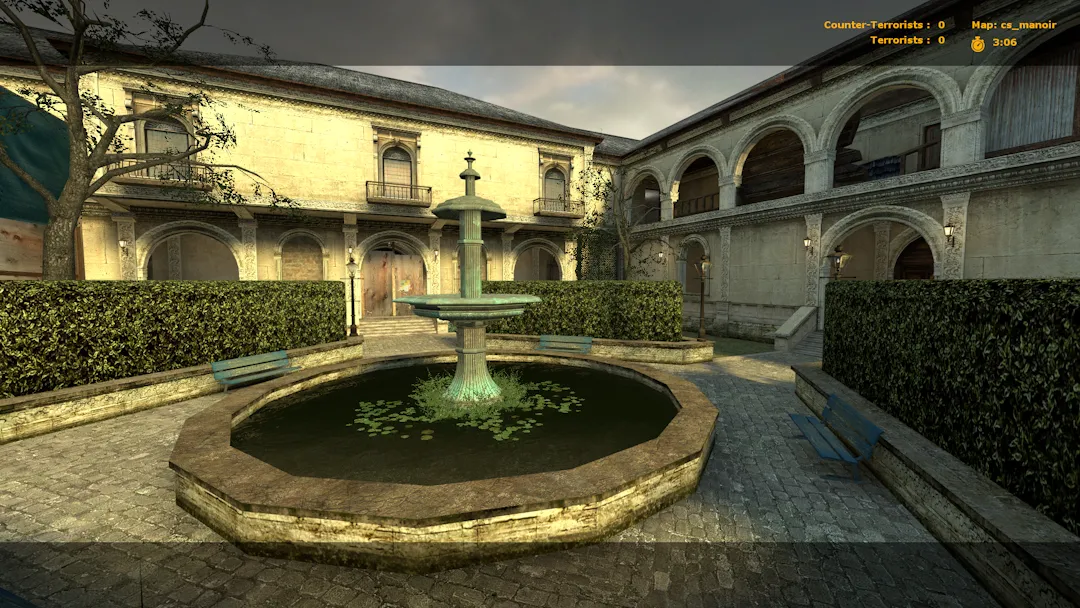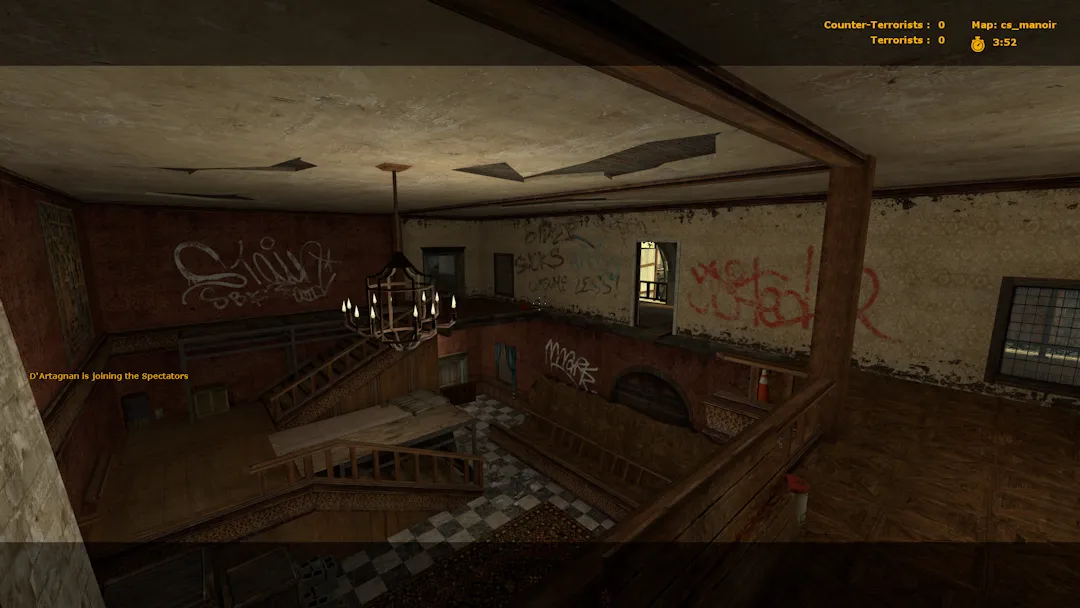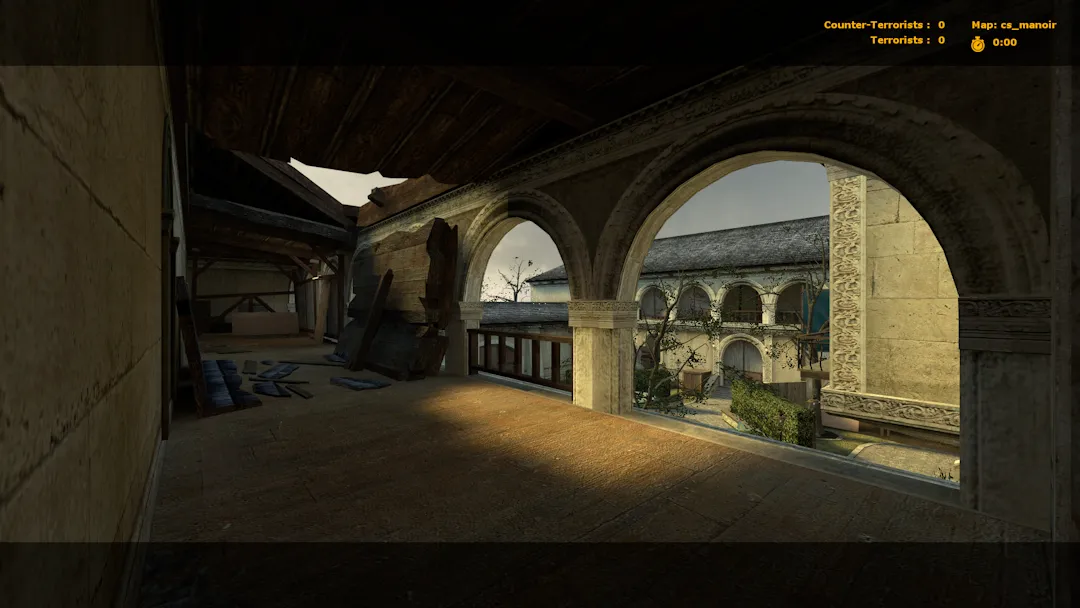


Hi everyone! How are you? I wanted to share the result of my favorite hobby: creating maps! Especially for my all-time favorite game, CS:S, a game I spent countless hours playing with friends back in the day.
This is the first map I've created and published. I've had experience creating maps before, but I never finished them. Four weeks ago (the development time for this map), I decided to put an end to that and start and finish my first map.
1. First Steps
The truth is, I always had a vague idea of what I wanted to do, but literally the entire map development was more or less improvised. However, as the map grew, ideas emerged about which routes to create and how to place the different engagement points.
From day one, I planned for the map to be compact and not too large, since creating a bomb defusal-type map would take more time. These maps need to be larger to offer more fluid gameplay and allow for more strategic decisions for the CTs or TTs. So, the map was going to be a hostage rescue map, similar to "cs_".
With that decided, I set out to create a map that mixed a little bit of everything, but above all, it draws heavily from my favorite Counter-Strike maps, such as Havana, Chateau, Piranesi, and Estate. I had the inspiration; the plans weren't very clear at first, but as you can see in the images below, the idea gradually took shape until it transformed into a layout that I consider quite solid.
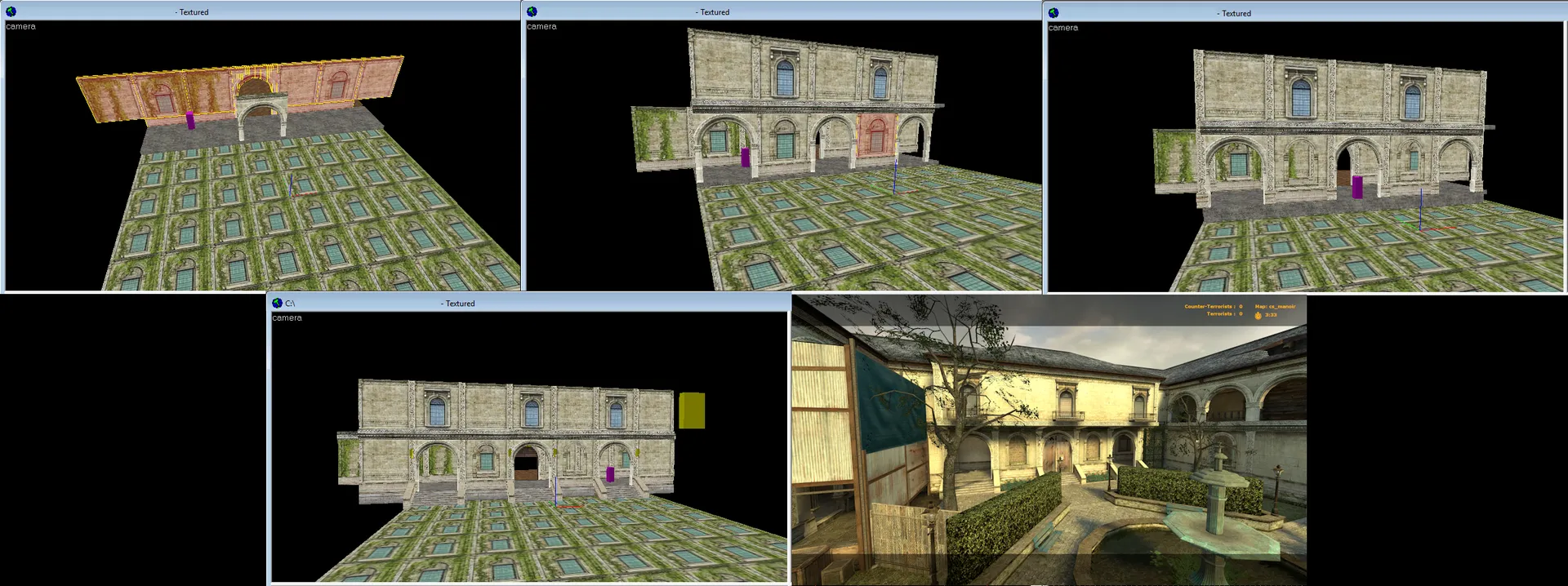
The construction method I decided to use was to create roughly proportional square brushes of a certain height, so they wouldn't just be long, single brushes that I would have to divide anyway. It was more convenient for me, and especially for keeping everything square and aligned. It helped me a lot to organize myself better and make the map symmetrical. Then I placed the textures, either doors or windows, on top, and on top of that texture I cut out the wall, always using the clipping tool, since using "carve" is obviously strongly discouraged. That way, once I had the shape of a window or door, I only had to copy and paste, which saved me a lot of time.
Next, I will show different images of the process before and after, and how everything took shape.
- General view of the courtyard
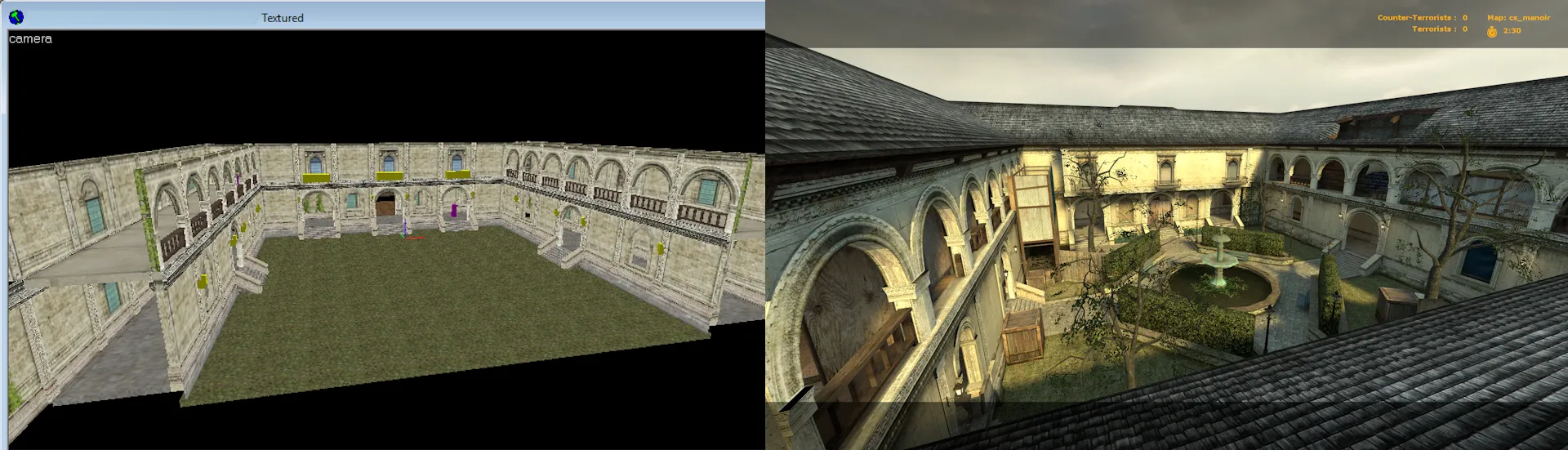
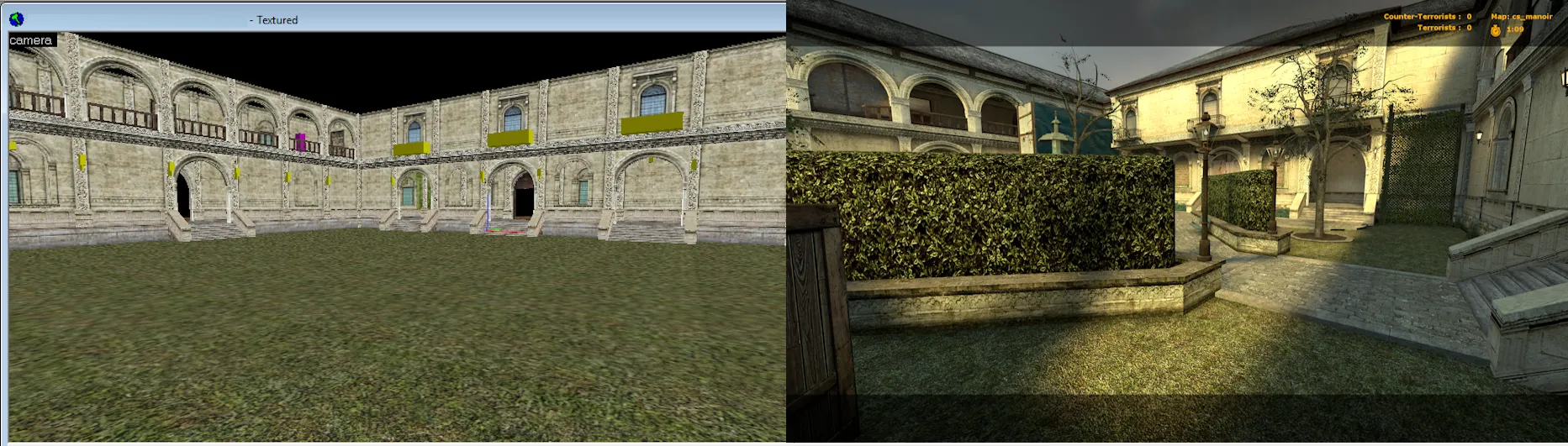
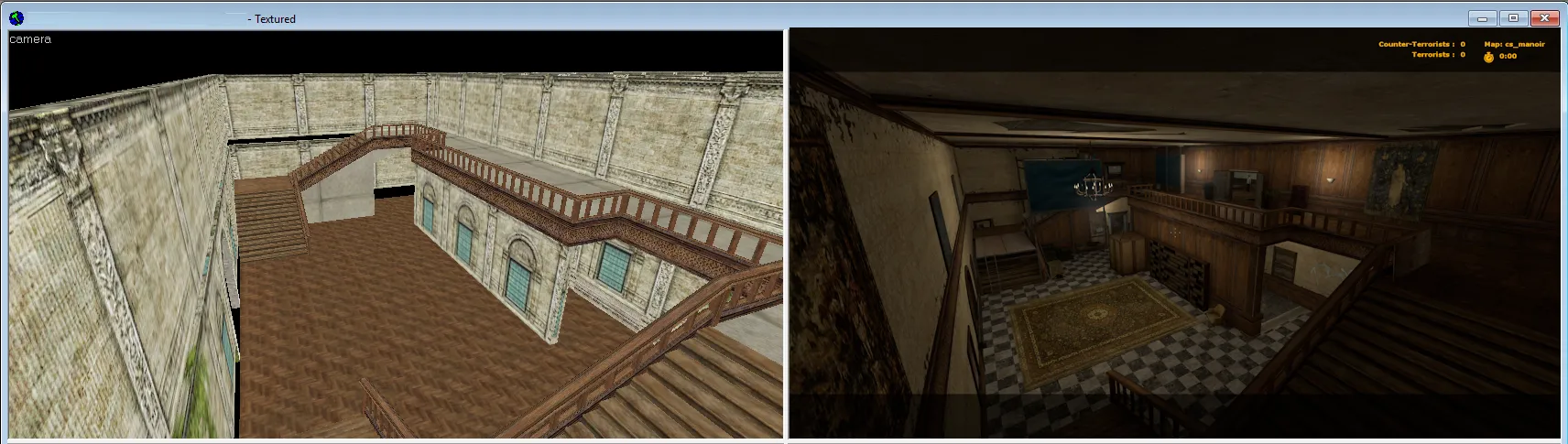
4. Evolution and creation of the fountain and paths in the courtyard
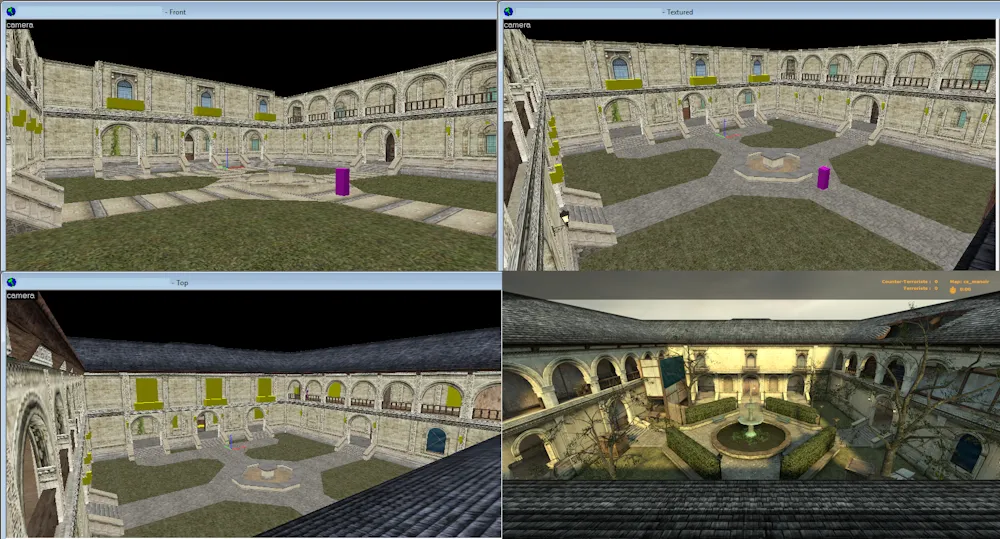
2. Main problems during the development of the map
I didn't have any major problems when I first tried to compile, and several times after that I received errors because I had exceeded the limit of T-junctions. This is mostly my own fault, as I'm coming from Source 2, an engine that doesn't impose as many limitations as our old friend Source 1. I only had to remove certain irrelevant details from the map. For example, the scaffolding area was made up of tubes, or cylinders. Since these had too many faces, they were very expensive for the compiler and were the main cause of the problem, so I decided to leave them square. The difference is really minimal.
Unsolved:
- I couldn't find a way to make "Ambient_Generic" work. I wanted to play the fluorescent light sound in the CT spawn area. What was the problem? The place already had a general ambient sound "chateau.interior" but I wanted to add that extra sound to give it a new layer and even more immersion, but I couldn't get it to work, neither with triggers nor with logic_auto, nor by trying other sounds nor increasing the radius, there was no way so I had to leave it like that.
- Radar map: I tried every possible way to make it visible on the radar, but nothing worked. I don't know the path the game uses to load the map texture. I tried all sorts of textures for the radar: .vtf, .tga, and .dds. Nothing worked.
3. Conclusion + What did I learn new?
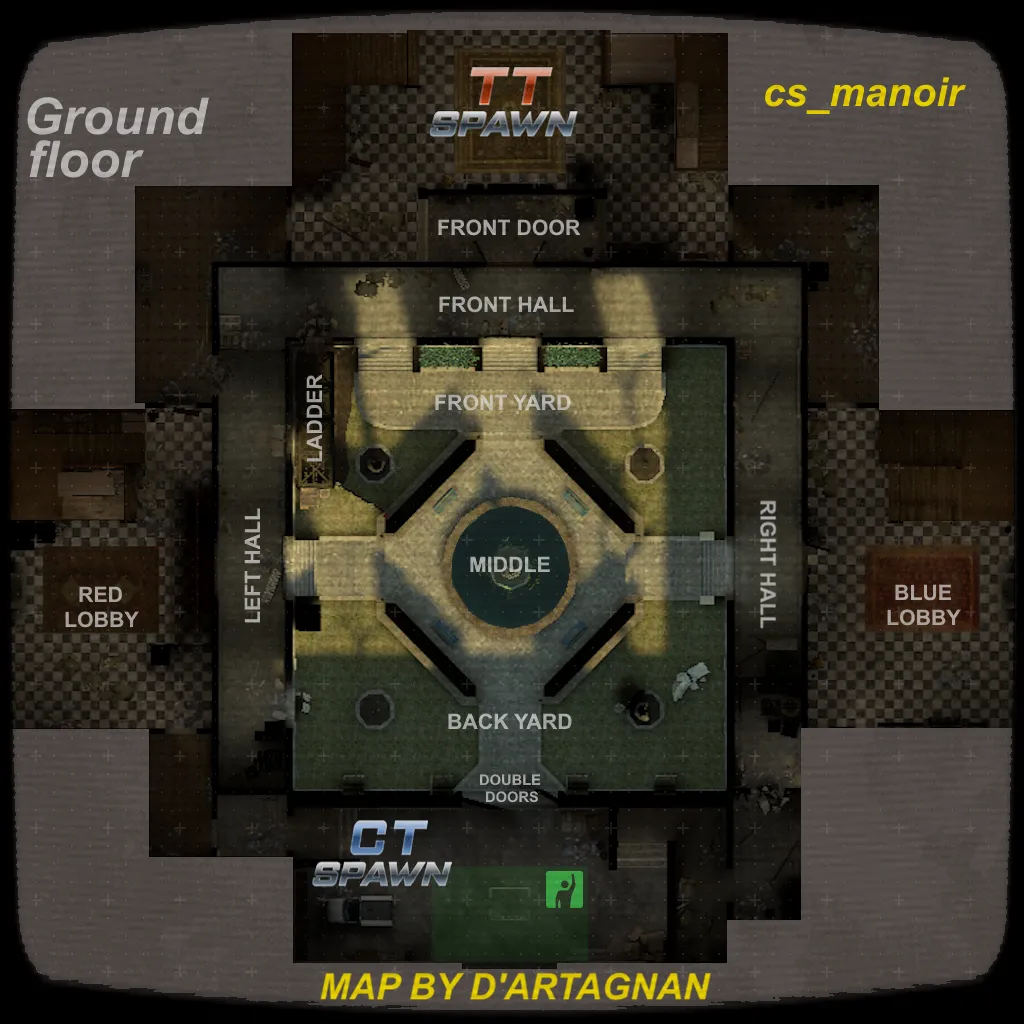
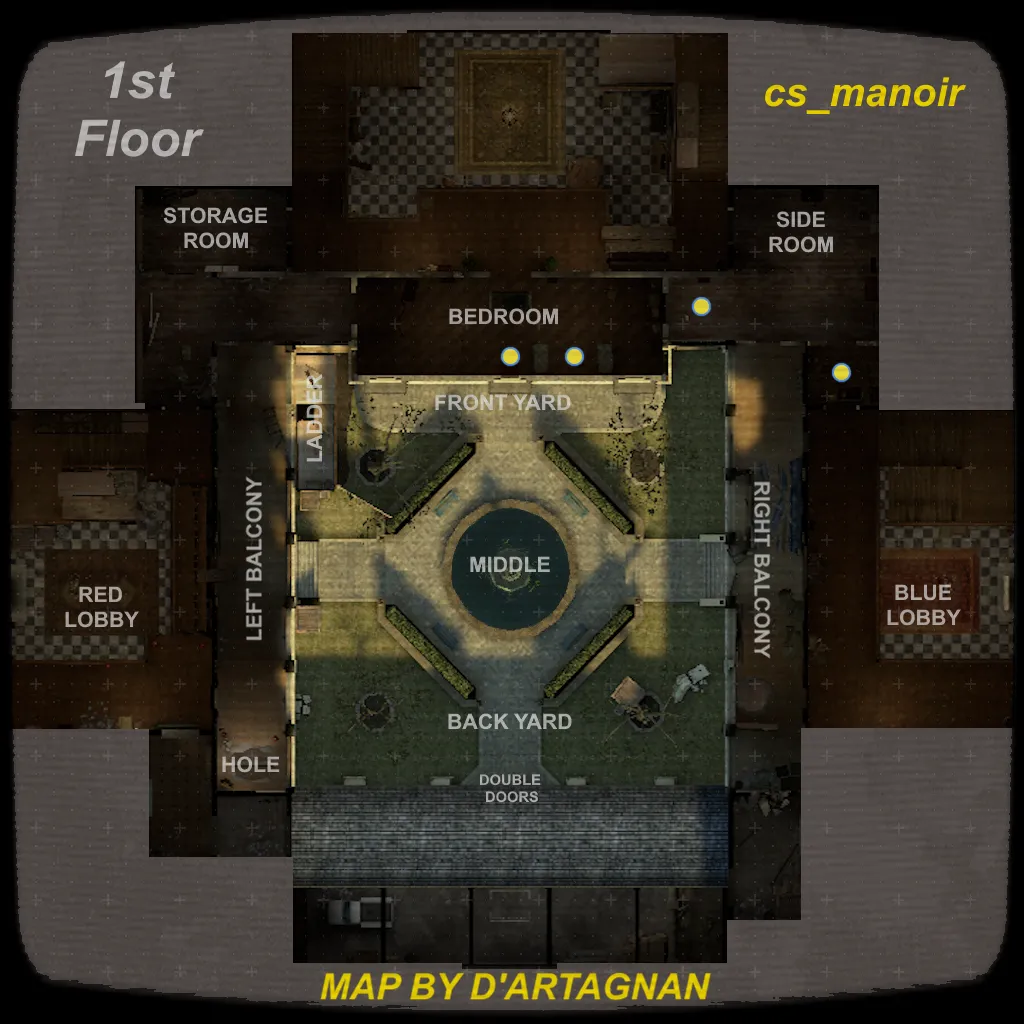
I had definitely never created or edited Nav_meshes before, so it was a completely new and, above all, fun experience for me. I could name different locations on the map so bots could make callouts or have their names appear below the map radar. Creating a map in Source is a very enriching experience for those of us who, with modern engines, have lost the habit of optimizing. Source punishes those mistakes and forces you to give it your all to make the compiler work. The experience feels so "handmade"—using a 20-year-old engine to replicate the same graphics, the same lighting, and the same environments. That unique vibe that Counter-Strike: Source maps gave me, and still give me, definitely evokes my childhood and always takes me back to my best moments. Thank you for everything, Counter-Strike: Source.
Anyway, guys, I hope you enjoyed this brief overview. I honestly didn't want to go on too long and bore you. I hope you have an excellent day, week, month, and a great rest of the year! Cheers!
Almost forgot! here are the map radar images!
Screenshots