

You probably accidently hit the "D" button which stands for the disable/enable. You can hit it again to re-enable or you can right click the "+" symbol in the upper left corner of the viewport and select "Disable Viewport" again to uncheck it. It is, in fact, a feature and not a bug.
Posts by Sigma
-
-
AND....... Victory!
http://us.battle.net/sc2/en/blog/10…-8-22-2013#best
Sorry, had to express some joy today.
-
Just sharing a little update on my core. It is rigged, now its onto animation, and a little more touch-up work needed on the texture.
[Blocked Image: https://pbs.twimg.com/media/BSOpg2WCMAA5PoJ.jpg:large]
-
Just thought I would share this piece that I am working on for a mod. Low poly is the goal (~500). Model is complete, could use a slight clean-up probably but its not bad, UV maps are complete. Working on diffuse texture. I don't have copy of engine so I'm not sure if I can use a bump/normal/AO map at all yet
 . Oh well!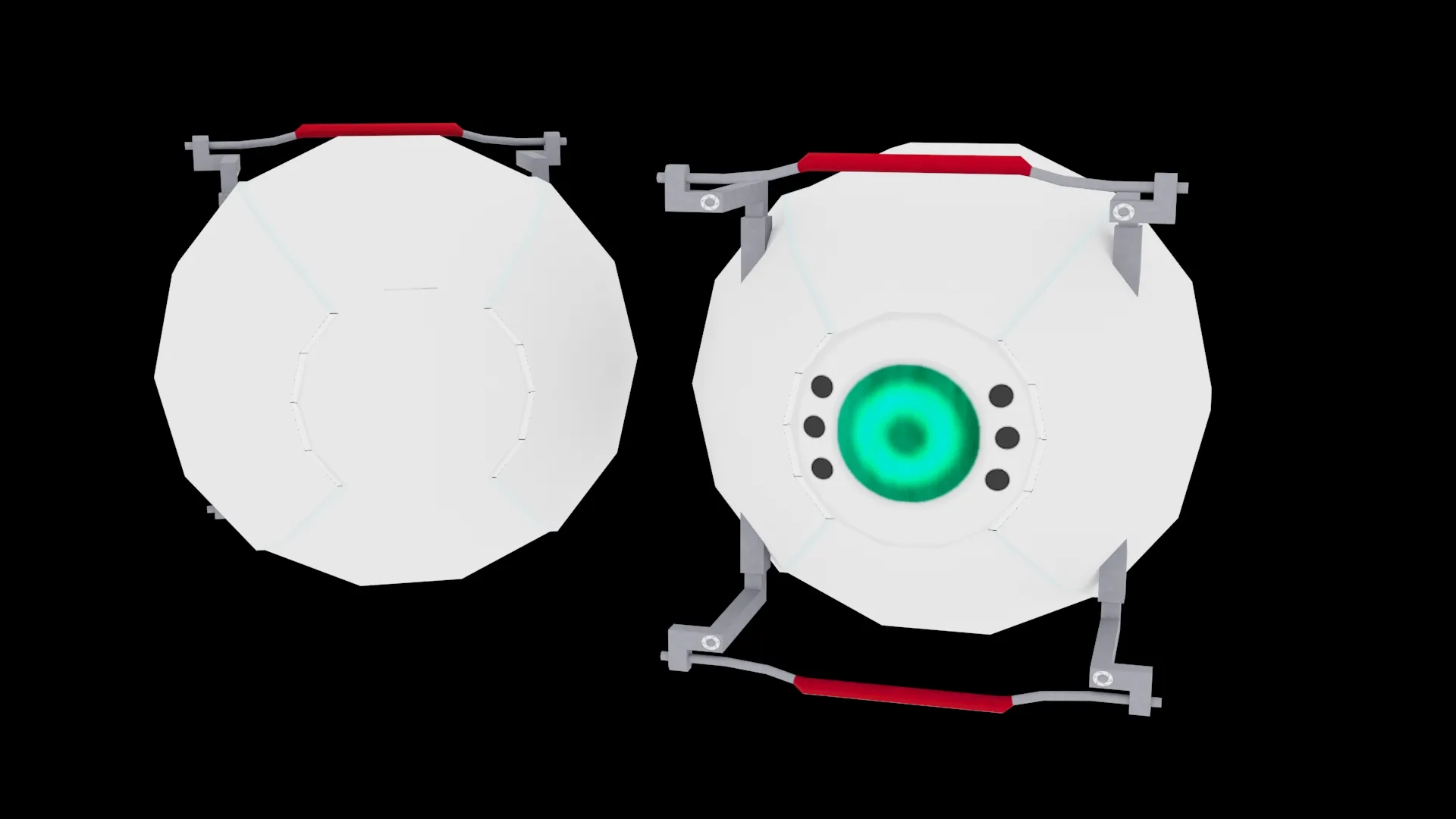
-

Had never watched that video until today. Good stuff. Learned a couple of things about topology and easier methods of cutting into surfaces.

-
There is a whole new sereis that Isaac Oster did over at 3D Total recently that is perfect for any beginner in 3DS Max. Alternatively if you are willing to put down some money than you can get the 3D Buzz 3DSMax: Mastering The Fundamentals vtm's for around $100 I believe on DVD (I bought it a few months ago -- still working through it but it is FANTASTIC!).
As for texturing -- that's just practice and learning some good stuff. If you're looking into game asset texturing than I suggest the help section at cdg.net as there are plenty of tutorials in there (although completely unorganized) that will help you to learn how to create things like metal, wood, synthetics, and cloth textures (diffuse) -- if you are wanting AO maps and specularity, again refer to Isaac Oster's vtm's at 3D Total.
I think the key is just cleaning up your geometry as much as possible and making it in quads instead of n-gons before you UV map it.
-
Quote from seir
Updated:
[Blocked Image: http://i.imgur.com/UjGA1qM.jpg][Blocked Image: http://i.imgur.com/eoERuXH.jpg]
I don't play X-Com so don't bite me -- but based on the geometry I am assuming that rifle utilized bullets.... so my question becomes.... where is the ejection port (other side?... that would be rough for a right handed shooter, which unless the charging handle is for amidextrous use it seems to me to be a right hander's rifle).
-
Updated stats and exercises for me on page 2:
Cross Fitness is in a word, intense. Absolutely one of the best workout series I have ever done. Wish I could get my butt outa bed for it but I'm too used to exercising in the evenings :/.
-
 Quote from ChimerayDisplay More
Sounds like you do "Development Director" kind of work mixed with a bit of "Producer" stuff.
No idea how to make a portfolio out of that though... Perhaps you could scout some linkedin positions for high profile companies and see what those people have as a background so you can compare what you're missing. I doubt a portfolio is super important for positions like these, experience leading teams in a commercial context is probably n1 followed by business degrees although I doubt every producer I've been in contact with had a degree (or common sense xD).
If you're leading and steering teams to deadlines and finishing work I'd say you're doing great. I doubt you're gonna get first hand advice from people that do this line of work on this forum though since we're further down the production line but most of us have dealt with those kind of managers so perhaps someone else will chip in.
Cheers!
PS: Your dream forge maps link is broken

Thanks for the tip! Appreciate it lots. As for the link... should be fixed now.

-
Hello all, I have (what I hope) is a relatively simple question, although explanation is necesary. I am currently employed in your average 8-5 non-games-industry job (banking). However, in my spare time I do many different things concentrating on 2 projects. What I would like to have some input on is where these tasks might be directed within the context of a games industry position.
The first project is my Starcraft II map team, wherein the members of the team create levels for use in competitive multiplayer matches. I am the team leader of this group, and as such I have a variety of different tasks and skills compared to the other designers. While I am more than capable of producing levels (and have), I find my time often devolves into organizational and promotional details. I am responsible for running and maintaing the team website. I initiate and cultivate relationships inside of the eSports industry to promote the use of our levels and other community made levels (very successful so far). I also organize my team and keep track/records of what everyone is working on, where they are at in each level's pipeline, and when completed I do a thorough review of the level. I am responsible for recruiting new level designers as well. This is all non-profit work, zero money is generated. Basically for everything that is not specifically level design related I am the go to guy, although I maintain a working knowledge of the tools and standards of Starcraft II level design.
The second project I am working on is a self-startup mobile game. This is a team effort between myself and 1 other person. I am responsible for the creation of the art assets and the other person for implementation into our game engine (right now: unity). This particular game is a 2d fighter akin to the original mortal kombat and/or street fighter in terms of art procedure (not 3D work -- purely Adobe dreamweaver/illustrator/photoshop/etc. . .). Additionally, I created the concept and design documents for this project -- that we are now prototyping.
I am looking for input and/or advice on how I might focus these two efforts towards a game design position. On the Starcraft II project, I do not feel that there would be appropriate materials to present in the same manner as an art portfolio. I have completed consultations with some of the larger esports companies -- and could present those if requested -- but for the most part this seems like office work that I am not quite sure how to put into the context of the roles/duties of a games industry position. For the mobile game, while it is too early to say one way or the other, this could possibly when complete be a portfolio piece in the sense of an artist's portoflio.
Any help or guidance would be much appreciated. Thanks for your time.
-
 Quote from arhurt
I should also mention that I'm regulating my carbs intake and lowering it as much as I can. I'm not on full keto, but pretty close, and should start seeing my fat go down in a few weeks (I've done it before and lost around 30lb with zero physical activity).
Just make sure that when you need to you start re-increasing your carbohydrate intake. Nothing worse than denying your body the nutrition it needs to properly recover from workouts.
-
Going back tonight after taking 3 weeks off (2 weeks for vacation + 1 week of being ill). Will be excited to get back in but I know its going to suck because I have to build back up, but that's OK. My routine is going to look like this I think (This is actually lighter than what I was coming from).
Monday, Wednesday Friday
Warm Up: Rowing or Jogging 5-10 minutes
Barbell Squat 10x3 (10 reps for 3 sets)
Clean 10x3
Bench Press 10x3
Dumbbell Curl 10x3
Jump Rope intervals (3 minute rounds, 10-14 rounds depending)
Arnold Press and/or Shoulder Press (my hardest exercise) 10x3
Skullcrusher 10x3
Dips till fail (x3 sets)
Core + Pushups
Stretch
Tuesday, Thursday, Saturday
Warm Up
Front Squat 10x3
Deadlift 10x3
Leg Press 10x3
Pull-up / Chin-up alternating Till Fail (3 sets)
Calf Raise 10x3
Hip Abduction 15x3
Leg Extension 10x3
If available: Heavy bag work -- same intervals as jump rope, 5-8 rounds -- if not, running at least 25 minutes
Burpees 15x2
Core + Pushups
Stretch
Stats Right Now (Aug. 6):
Height: 6 ft 1.75 in
Weight: 178 lbs
Body Fat (Electronic): 11 %
Bench Press Max: 145 lbs
Barbell Squat Max:
Goal Stats:
Body Fat: 7% or lower
Bench Press Max: 185 lbs
Barbell Squat Max: 225+ lbs
Pull-Ups / Chin-Ups Max: 15+ each (alternative 10x3 + dumbbell weights)
I will be doing increase eventually to a higher weight lower rep cycle and than drop the weight from my highest and re-increase the reps so I can build past that point. I will probably end up dropping a couple of exercises from each day to pary down the timeframe in lieu of working larger muscle groups and cutting out unnecessary isolations (i.e. leg extension when I have squat + press + calf raise already).
Having just read some about some more easily accomplished circuit training regimens, I am going to switch it up and go that route before moving back into the above weight liting routine. I am going to try the workout model used by Jason Statham and see if that doesn't work better for me (less time + better results possibly for my personal goals). See that workout here: http://au.lifestyle.yahoo.com/mens-health/fi…day-wo1000rkout
Someday, when I have children, I am going to adopt the "cat workout" only I will use my children (makes you stronger the bigger/older they get). Life goal: sexiest future husband on the block

-
 Quote from Vilham
are those island expos on a 1v1?
Yes they are.
-
Sorry to revive old thread but had to share news that Blizzard has finally considered one of my map team's efforts for the official ladder so good news there: http://us.battle.net/sc2/en/forum/topic/9573037275?page=1
Picture of the map: http://dreamforgemaps.net/?attachment_id=481
QuoteWe heard and agree with feedback from many of you that a complete alignment on the 1v1 map pool across all 3 regions as well as ladder would be cool to try at least for 1 season to check if this direction is better.
We've been discussing with all of our partners on what exact maps to have next season and here's the current list we're thinking on.
3 New maps:
- Yeonsu - new TL map contest map
Frost - new TL map contest map
Polar Night - new gsl map
- Yeonsu - new TL map contest map
-
While I cannot verify the accuracy of any one of these tuts in regards to texturing and implementation on CS:GO -- http://www.cdg.net/forums/viewfor…f3833f70c42edb0 -- this forum might be of particular use to you as this group of people typically dealth with CS 1.6, CS:S, and CS:GO more recently (although the forums have died off more or less). The tutorials are most likely out of date by this point in time but they might be of use. I'll search through and see if I can't point out some particular tidbits of knowledge but am stuck at work at the moment.
-
 Quote from CompoSITe
That Geoff guy seems full of crap.
Anything you would like to add that maybe didn't get into the article?
-
-
Have you updated your SDK to the most recent version (it was just released yesterday)? That would be where I start if not...
http://store.steampowered.com/news/10962/
Are you having trouble with any other steam related programs?
-
Hello all, first time poster here. I have recently been getting back into the swing of things in game modding and development and recently discovered this great community. Because I am currently in the midst of pre-alpha development I have been reading news industry sites non-stop practically. I noticed this article today and felt it was worthy of being shared with you fine folks in case you do not see it otherwise. For many of you I am sure it will not ring any new bells, but perhaps for a few new people or those re-acquanting themselves with level design it might set off a few new bells. Anywho, http://www.gamasutra.com/view/feature/1…design_the_.php is the original link. What follows is a non-linked verison. Please enjoy.
Original source: Gamasutra, Author: James Holloway, June 26, 2013
QuoteDisplay MoreDeathmatch Map Design: The Architecture of Flow
June 26, 2013
Over the lifespan of the current generation of game consoles, the first person shooter, or FPS, has risen to become one of the most popular genres among Western audiences. Budgets of the best-selling series have swollen to eight figures to meet public demand for ever-more visceral simulacra of wars contemporary and futuristic. (Historic settings have fallen out of favor.)
"Faster, more intense" was famously George Lucas's preferred direction to actors, but it's an apt mantra for the developers of the ever more intense and glossy single-player campaigns. The thrill and the spectacle have helped to cement a handful of perennial franchises in the consciousness of the gaming mainstream.
But more important still may be the online multiplayer modes where dedicated gamers play in the weeks, months, and years after the fleeting delights of the campaign have faded from memory. For every hour clocked in single player, many gamers will spend days facing off against unseen (though often heard) human opponents in dedicated multiplayer maps.
Though the ensuing carnage may appear wanton, these arenas are carefully crafted to foster gameplay that will, ideally, entertain as much for the 300th time as they did for the third.
To find out how designers go about creating these play-spaces, many of which gamers will come to know better than the insides of their own refrigerators, Gamasutra spoke to some of the masters of the craft: 343 Industries and Certain Affinity, custodians of the Halo universe, and Respawn Entertainment, whose founders created the Call of Duty series and have the upcoming Titanfall on tap.
Ask either 343 or Respawn the first thing they think about when designing a multiplayer map, and they'll tell you the same thing. No map is designed in isolation. No one map can be all things to all players. Variety is vital. "You know that you're going to have multiple maps, so you want to make sure that the assortment of maps covers all different gameplay types based on the modes, objective types, or the weapon sets and vehicles that you have," says Kynan Pearson, lead multiplayer level designer at 343.
In the case of a Halo title, designers will ask themselves if a map should be large or small, the size influencing the ideal number of players, the engagement distances and the weapons best suited to them, and the suitability of vehicles.
As fundamental is the choice between so-called symmetric maps and asymmetric maps. Symmetric maps tend to have either mirror or rotational symmetry about their center, with two opposing teams spawning at opposite ends presented with essentially the same landscape before them. Such maps are particularly suited to end-to-end objective-based game modes such as capture the flag, Pearson explains, affording neither side an advantage due to superior elevation or cover.
Asymmetric maps by their very nature allow for a greater diversity in topography, which lends the maps to other sorts of objective based games that eschew team bases in favor of designated positions to be captured and held. Depending on game mode, these positions may number from one to many, may remain static or change location, or any permutation thereof.
The quest for diversity is a source of inspiration for Geoff Smith, game designer at Respawn Entertainment, who, during his stint at Infinity Ward, designed multiplayer maps for the studio's Call of Duty series, up to 2002's Modern Warfare 2. "Sometimes I'll find some cool-looking location picture online and that will give me ideas," he explains. "Other times I'll look over the game we are making and see what kind of environments or gameplay style is missing. Maybe we have too many long-range maps, maybe not enough close quarters battle types. Maybe we need a different location look."
The ratio of asymmetric to symmetric maps is not a question that will have troubled Smith. Call of Duty is a military title, and one that sets its battlegrounds in the real world. When it comes to favelas, submarine bases, oil refineries, and their ilk, symmetry and realism tend to be mutually exclusive. Symmetric maps are out. This is less of an issue for a Halo title, where players are just as likely to be exchanging fire on, say, a gigantic monument to an ancient alien race drifting through an asteroid belt (as good a description as any of Halo 4's Monolith). Symmetric? Why not?
In the case of a Call of Duty title, though efforts are clearly made to make asymmetric maps fair, a simple tweak of the game rules can ensure balance. Play capture the flag on Modern Warfare 2 and you'll find teams change ends at halftime. These spaces do not exist in a vacuum, but must coexist with both game mechanics and game mode rules.
But no one map should be too specialized. "I think you will always have a primary and a secondary [game mode] that you go for," Pearson says. "As long as it works with a team-based and a free-for-all mode, and an objective type, it doesn't matter which one it is, it'll tend to be multi-versatile. You will build maps with certain objective modes in mind to make sure that they're highlights and to make sure they work really, really well, but you don't try to do that at the detriment of other modes."
With this basic spec decided, it's time to begin designing. At the outset, paper is weapon of choice. "To me the layout is the most important aspect of a map, so I might quickly sketch out some patterns and paths on paper to start to figure out how I want the map to play," says Smith.
"When it's on paper it's cheap and easy to riff on and iterate," explains Mike Clopper, lead level designer at Certain Affinity, who collaborated with 343 in the making of Halo 4. "If you start out with an initial basic line drawing, and that's really concentrating on the flow of the map and the main spaces we want to facilitate conflict in. Where are these great clashes going to happen? What are the directions that people are going to take to make those things happen?"
Echoing Smith's sentiment that the layout of the two-dimensional plan is all-important, Clopper explains that the paper design is a crucial reference point when designing the detail in 3D. "It allows us to think back to what the essence of the map is. Sometimes in the 3D realm you can go down a rabbit hole riffing on some of the smaller encounter spaces."
It's on paper that the flow of a map emerges. Flow. Halo 4's designers describe it as an invisible force continually impelling the player onward, and it's a word that recurs again and again in conversation with them. "We tend to describe things based on the idea that the player is a camera, and what the camera sees and what the camera can perceive just running forward without any additional information lets you know where you're able to go," says Pearson.
A map that flows enables players to make intuitive split-second decisions about their preferred route, he explains. "There should be no point where you're forced to do a 180 degree turn to see something to know that you need to go there. Everything needs to be presented to you as you move through the level.”
In many ways, flow can be thought of as an absence of frustration on the part of the player, at least so far as geography is concerned. Jumpable gaps are a case in point. "Any time you have a gap, the distances between where you jump from and the other side are either so close that you know you can make it and you recognize that as a route and a place you can flow into, or they're so far apart that you never make the mistake of trying to get somewhere where you can't reach even though it looks like you should be able to."
A million and one factors influence flow, many of them minuscule. As anyone who has spawned at the back of a squad of teammates can attest, even the direction a player faces when she spawns greatly influences where she will go (i.e. almost always forwards, in an almost trance-like state.)
The location of desirable power-weapons and vehicles, which can tip a battle in favor of the player who commands them, inevitably exert a gravitational pull upon gamers. In a thoughtful concession to new players, Halo 4 highlights such items with superimposed markers so that their locations no longer have to be learned through experience.
The flow of play and players on a map will not become evident until testing, which begins as soon as a basic 3D model is roughed or "blocked" out, and continues as the design iterates. To build the 3D maps, Halo developers use proprietary tools developed in-house.
Respawn's Geoff Smith cut teeth designing community maps for Counter-Strike using the Valve Hammer Editor (known as Worldcraft at the time). He made a name for himself with the map De_Karachi01, a map that ultimately launched his map-design career. He would later rebuild it as Karachi for Modern Warfare 2 using Call of Duty mod tool Radiant, a spin-off of id's GNU-licensed GtkRadiant level design tool. "I usually have a pretty clear layout idea before I start using an editor," he says, "even if that layout isn't perfect from the start (they never are)."
"I try to get a level playable as soon as possible. Multiplayer layouts need hours and hours of playtime to make adjustments to make sure the map plays well," he adds. "So there is no time to waste theorizing about how it will play; you just need to get on with it."
Ask designers if there are any metrics they track when developing and testing, it quickly becomes apparent that the initial approach is softer and more intuitive than that. "Early on I am looking for the distances at which people meet: where they stop to shoot at other players and if they can even find each other," says Smith.
Similarly, Halo 4's designers keep a watchful eye on distance. "We definitely have standards for the size than something can be and the time it takes from one corner of a map to the other, or one objective sight to the other," says Pearson. "It's to make sure we're tuning the experience to keep the time-to-death down, or making sure that your time-to-engagement is enough to give you a breather between dying, but not so long that you're hunting through the map and not finding people." Again, game mechanics have a direct bearing. In Halo 3, sprinting was impossible. In Halo: Reach, sprinting was a selectable armor ability. In Halo 4, everyone's at it, and the maps have grown to compensate.
Fundamentally, though, 343 and Certain Affinity simply want to know if maps are fun or not. "Honestly, initially, there aren't a lot of performance metrics we're really looking for," says Clopper. "It's very hard to describe, but when you're in a play-test room and people are moving around a map and having an amazing time there's a sense of fun you can feel in the room. People are yelling, people are having a great time. They're shooting their coworkers. These amazing battles are happening, and that's the great thing about Halo: crazy stuff can happen with the physics."
Further into the development process, Halo 4's developers adopt a more measured approach. "You tend to use the metrics based on playtests to refine the map and define the areas that might have been weaker into more powerful positions," says Pearson. "You never want to have a map that has dead ends or areas of the map that go unutilized, because then it's wasted space and it's not worth the effort of creation. Those tend to get whittled down and worked out so that you start prioritizing areas that get less play to make them just as usable and just as versatile."
Call of Duty's multiplayer modes dial up the tension as players try to stay alive to protect their "killstreaks," chains of consecutive kills that see players rewarded with powerful ordnance that can ultimately swing the outcome of a match. Smith describes how maps tend to be built around tactical locations such as "a high mountain cliff that looks over lower fields," or "a building that overlooks a main communications or travel artery."
"Early on in development I look to see if these locations are being used," says Smith. "If so, is it too strong a position? Can the other team clear the enemy out of the location? Is it too easy to take and no one survives there for very long? You can control the flow of the map this way."
Describing Skyline, which, like Monolith, is a map from the Majestic DLC, Clopper echoes the importance of balancing strongholds. "Skyline has this fantastic center structure, but also out to the wings are these two bases that can also offer a very similar kind of thing. What you'll see is fights moving from the center, flowing around the space, then coming back to the center."
"What we're trying to do is sort of facilitate flow between these strongpoints and counter-strongpoints," he adds. "We want to make sure there are multiple areas and multiple strategies to facilitate flow around the map. We don't want people arriving at one strongpoint, camping out there, and then winning the game just sitting in one spot."
The bases at each end of a symmetric map are perhaps the definitive strongholds. In a capture the flag game, it's imperative that these can be breached. "The common practice is to make sure that there's three entrances to any one area that you could defend so that though you might be able to cover one, and potentially two at the same time," Pearson explains. "That always leaves an alternative route for people."
Guaranteed to interrupt a player's Zen is respawning mid-battle only to be lost or disoriented due to a lack of distinct features in the player's field of vision. This goes double during a capture the flag battle on a symmetric map. If the opposing team is halfway home having made off with your flag, the last thing you want is to blunder guns blazing into your own empty base, mistaking it for the enemy's. It's with good reason that map designers keep their art teams on side, as a map's decoration provides the visual cues players need to orient themselves.
Though not strictly a symmetric map, Blood Gulch in the original Halo featured base structures at either end of a valley, each differentiated by decals on the bases' ramparts, colored red or blue, but not all that obvious from a distance. As FPS games have become more sophisticated, so have the graphical flourishes that allow players to quickly orient themselves. Halo 4's Ragnarok, a map which has inherited much of Blood Gulch's DNA, does away with such decals in favor of a sheer mountain cliff face behind one base and a shoreline behind the other.
Skyline is named for the dramatic urban vista visible at one end of the map. It's a stunning piece of skybox work, but also fundamental to the map's usability. Players can generally at a glance tell which way they need to go.
Recognizable details can also let a player know precisely where they are. "I joke with coworkers, saying that it's like designing a mall," says Respawn's Smith. "You have your end stores like Macy's and Bloomingdale's with the food court and some open crossroad in the middle. These locations help shoppers navigate the mall. I'm dating myself now, but before everyone had cell phones, your parents would tell you they would meet you at the food court at noon. You only had a watch and the layout of the mall to help you find your way back."
Ensuring each building in an urban map is visually unique will help greatly, but even smaller cues are useful. In the Modern Warfare 2 map Estate, spawning with something as simple as a watermelon in your field of vision lets you know you've spawned in the kitchen of the hilltop mansion, triggering instinctive, split-second strategies (in my case this involves hauling derriere upstairs to find an unmanned vantage point, booby trapping the landing en route.)
Great multiplayer maps are not conceived whole, then. They emerge. The iterative process of tweaking and testing refines the geography into something both fun and distinct.
Do the designers have favorite maps? Smith recalls his days as a "broke artist" playing GoldenEye, Perfect Dark, and Turok. "It was only when I got into Counter-Strike that I started noticing levels and the guys that made them," he recalls. "This was maybe 1.5 or 1.6 and guys like 3D-Mike were making pretty awesome stuff. I have always loved Narby's maps for how clean and easy to navigate they were. This is when I started really studying map layouts. So really no single map in particular influenced me but the whole CS mapping scene did."
Of his own maps, Smith cites Modern Warfare's Crash and Modern Warfare 2's Storm. Crash features a downed helicopter in a Middle East town, surrounded by numerous bunkers and sniping nests. "It was roughed out very early on, and it just had a ton of playtesting time. So I got to noodle the heck out of the gameplay."
Storm is a larger map set in an industrial estate. "It was a DLC map and I don't think it was very popular," Smith says. "I tried to change the way the game itself played by playing round with the layout of the level. At the time -- Modern Warfare 2 -- had perks [selectable abilities] that were letting players get around the maps very fast and it was breaking the front lines of firefights. As soon as you started having a shootout, an enemy would sprint around and flank your position in seconds and his team would spawn near him so the frontline would change very quickly. To counter this I made the paths really long with almost no exits once you started down them."
Pearson laughs when asked for a favorite of his own designs. "That's like asking to pick a child."
Smith's advice to budding level designers is that they should know their tools. "My suggestion would be to find a photo of some building facade you like and try to build it as precisely as you can," he advises. "Go as far as learning how to make the textures for it and lighting it the same way as in the photo. That one picture can give you a ton of things to learn and that's just making something that looks good. You still need to figure out how to make levels that are fun. You need to figure out what a game is doing that allows you to enjoy it. I did this for such a long time, once I got into the industry and, more importantly, once I got over the feeling that somebody in a suit was going to call my bluff and ask me to leave the building."
He is enthused by the possibilities that the Steam Workshop offers, and hopes this will swell a resurgence in community map-making.
"Other than that it's just plain old hard work," Smith concludes. Creating flow, it turns out, is more difficult than it looks.
